
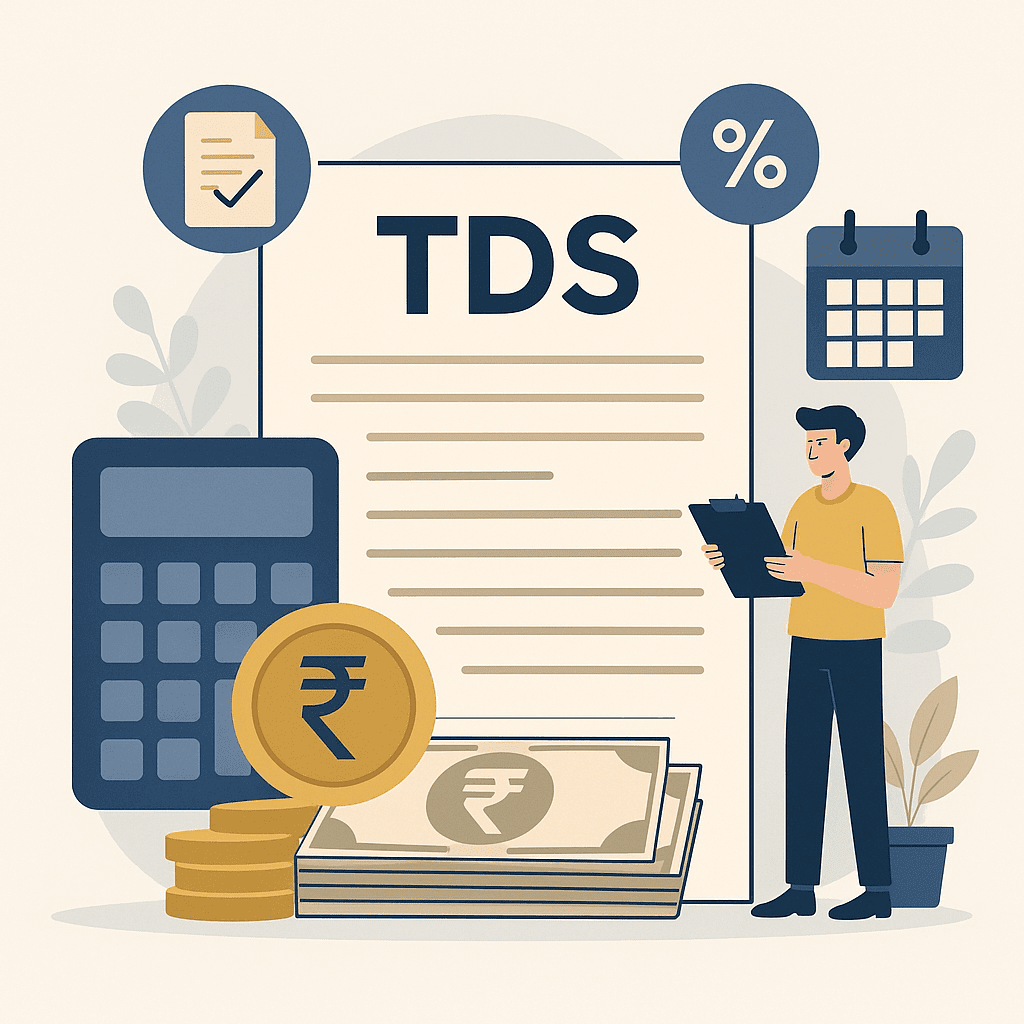
What is TDS? (Meaning)
TDS stands for Tax Deducted at Source, governed under the Income Tax Act. It requires certain persons (deductors) to deduct tax at the time of making payment for services, salaries, contracts, rent, professional fees and several other specified categories.
The deducted amount is deposited with the Income Tax Department and visible in Form 26AS for the recipient.
Businesses can calculate TDS while preparing invoices or payments using the TDS Calculator available under calculators on ModernMunshiji.
Why TDS Exists?
The purpose of TDS is to collect income tax at the source instead of waiting for year-end returns. It helps Government:
- reduce tax evasion
- track transactions
- ensure timely tax collection
- bring transparency
- monitor high-value payments
When is TDS Deducted?
TDS is deducted on various payments including:
- Salary
- Commission
- Professional services
- Rent
- Contract payment
- Interest
- Consultancy fees
Rates vary depending on section and nature of payment.
Who Must Deduct TDS?
TDS must be deducted by:
- Companies
- LLPs
- Partnership firms
- Individuals/businesses (above turnover limit)
- Government authorities
- HUF (in certain cases)
Individuals registered under GST or doing business also need professional help with income tax, GST & TDS filing — ModernMunshiji provides complete compliance services.
TDS Return Filing
After deducting TDS, you must file quarterly TDS return mentioning:
- deductor details
- payment details
- TDS sections
- PAN of payee
- TDS deposited
- challan numbers
Once filed properly, TDS appears in Form 26AS of recipient.
Forms for TDS Return
| Form | Purpose |
|---|---|
| 24Q | Salary TDS |
| 26Q | Non-salary domestic payments |
| 27Q | Payments to NRIs |
| 26QB | TDS on property purchase |
| 26QC | Rent |
| 26QD | Contractor / Professional services |
TDS Due Dates
TDS return is filed quarterly:
| Quarter | Due Date |
|---|---|
| Apr–Jun | 31st July |
| Jul–Sep | 31st October |
| Oct–Dec | 31st January |
| Jan–Mar | 31st May |
Payment of TDS (deposit) must be done monthly:
- On or before 7th of next month
Interest & Penalty
Penalty applies if TDS is not:
- deducted
- deposited
- reported
- filed
You may also face:
- late fee
- interest
- penalty under Income Tax Act
TDS Certificate
After filing return, deductor must issue Form 16 / Form 16A to employee/vendor so they can claim credit in their income tax filing.
ModernMunshiji helps businesses file both TDS and ITR, so deduction and reporting stays accurate.
How TDS is Calculated (Simple Example)
If professional fees = ₹50,000
TDS @ 10% = ₹5,000
You pay:
- ₹45,000 to vendor
- ₹5,000 deposit to Government
You can instantly compute this using the TDS Calculator available in your calculators section.
TDS vs TCS
| TDS | TCS |
|---|---|
| Deducted by payer | Collected by seller |
| Before payment | On sale |
| Salary, fees, rent | sale of goods |
Documents Required for TDS
- PAN of vendor
- TDS challan
- Invoice copy
- Section applied
- Payment details
Frequently Asked Questions
Is TDS mandatory?
Yes, if payment crosses limits specified under each section.
Can I claim back TDS?
Yes — credit reflects in Form 26AS & can be adjusted while filing ITR.
Do I need TAN for TDS?
Yes, except for TDS deducted on property or rent.
Can NIL TDS return be filed?
Yes, if no deduction happened.
Conclusion
TDS remains one of the most important components of Income Tax compliance in India. Incorrect deduction or late filing may result in penalty, interest or notice. Businesses and individuals must ensure timely deduction, deposit and quarterly return filing.
ModernMunshiji provides complete TDS filing, GST return filing, income tax filing and business compliance services so every legal requirement stays updated while you focus on business growth.